JVC RD-1450 Reel Tape Deck 744
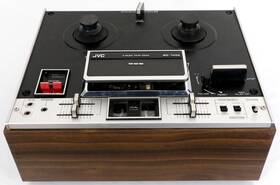
( Brand: Jvc ), ( Manufacturer Part Number: RD-1450 ), ( Type: Tape Recorder )
Review JVC Reel Tape Deck Lot 744
The **JVC RD-1450 Reel-to-Reel Tape Deck** is a timeless, high-performance audio workstation designed for audiophiles, musicians, and recording enthusiasts who demand precision, durability, and rich sound quality. Introduced in the mid-1970s as part of JVC s legendary RD series, this model stands out as a refined masterpiece of analog engineering, blending robust construction with sophisticated features that cater to both casual listeners and professional studio users. Built with a sturdy metal chassis, the RD-1450 exudes a sense of solidity and craftsmanship, ensuring it remains a reliable companion for decades of use. Its sleek, retro-futuristic design complete with a clean, minimalist control panel features a full complement of knobs, switches, and indicators that are both intuitive and tactile, allowing for seamless operation whether in a home studio or a portable setup.
At the heart of the RD-1450 lies a **dual-capstan, dual-roller transport system**, a hallmark of JVC s reel-to-reel technology that delivers unparalleled tracking stability and minimal wow-and-flutter, even at high speeds. The deck supports a variety of tape formats, including standard 1/4" and 1/2" tapes, accommodating both professional and consumer-grade media for versatile recording and playback. Equipped with **four-track recording capability**, the RD-1450 enables multi-track mixing and overdubbing, a feature that was revolutionary in its time and remains highly sought after by musicians and podcasters today. The inclusion of a **high-quality Dolby B noise reduction system** further enhances the deck s performance, reducing background hiss and improving the signal-to-noise ratio without compromising the warmth and character of analog tape.
Sound quality is where the RD-1450 truly shines, thanks to its **high-fidelity preamp and output stage**, which are optimized for both mono and stereo operation. The deck s **phono input** allows for direct connection to turntables, while its **line-level inputs and outputs** ensure compatibility with modern audio equipment, making it a bridge between vintage and contemporary setups. The **variable-speed control** ranging from 1.8 to 19 ips (inches per second) provides flexibility for different recording needs, whether you're capturing high-resolution audio at 7.5 ips or working with slower speeds for extended recording sessions. Additionally, the RD-1450 includes a **built-in pitch control**, allowing for precise adjustments to playback speed without altering tone, a feature that is invaluable for editing and mixing.
Beyond its technical prowess, the RD-1450 is a **durable workhorse**, constructed with components that have stood the test of time. Its **self-locking capstan and pinch roller mechanism** ensures consistent tape tension, reducing the risk of slippage or misalignment, while the **high-quality motors** deliver smooth, reliable operation with minimal maintenance. The deck s **metal tape reels** and **durable tape guides** further contribute to its longevity, making it a practical choice for both hobbyists and professionals who prioritize reliability. While the RD-1450 lacks some of the digital conveniences of modern tape decks, its analog purity and hands-on control make it a cherished tool for those who appreciate the tactile experience of working with tape.
For collectors, musicians, and audio enthusiasts, the JVC RD-1450 is more than just a piece of equipment it s a **piece of history** that embodies the golden age of analog recording. Whether used for archiving vinyl records, creating multi-track demos, or simply enjoying the warm, analog sound of tape, this deck offers a blend of nostalgia and functionality that few modern devices can match. With its **timeless design, robust build, and exceptional audio performance**, the RD-1450 remains a coveted addition to any audio collection, proving that some technologies never truly go out of style.
### **Pros and Cons of buying a JVC RD-1450 Reel-to-Reel Tape Deck (1974 Model)**
#### **Pros:**The JVC RD-1450 is a classic reel-to-reel tape deck from the early 1970s, and its strengths lie in its historical significance, build quality, and analog audio performance.
1. **High-Quality Analog Sound**
The RD-1450 features a **high-end analog tape transport** with a **16-track recording capability**, allowing for multi-track mixing and overdubbing ideal for musicians and audio enthusiasts. Its **Dolby B noise reduction** (a cutting-edge feature at the time) helps improve signal-to-noise ratio, making recordings cleaner than many of its contemporaries.
2. **Durable and Well-Built Construction**
JVC was known for robust mechanical engineering in the 1970s. The RD-1450 has a **heavy-duty metal chassis**, sturdy motors, and precision engineering that suggests longevity if maintained properly. The tape path is well-designed, reducing flutter and wow, which were common issues in older decks.
3. **Versatility for Recording and Mixing**
- **Multi-track recording** (up to 16 tracks) makes it useful for **home studios, podcasting, or analog experimentation**.
- **Dolby B noise reduction** was a rare feature in consumer decks, enhancing recording clarity.
- **High-speed recording (30 ips)** allows for professional-grade audio quality, though this requires high-quality tape.
- **Overdubbing capability** lets users layer recordings without stopping the tape, a useful feature for musicians.
4. **Collectible and Vintage Appeal**
- The RD-1450 is a **rare and sought-after model**, especially among audiophiles and vintage tech collectors.
- Its **retro design** and **historical value** make it a unique addition to a music studio or home audio setup.
- Some users appreciate the **nostalgic feel** of analog recording, which offers a different workflow than digital alternatives.
5. **Potential for Restoration and Modification**
- Many vintage tape decks can be **restored or upgraded** with modern components (e.g., better motors, electronics, or tape guides).
- Enthusiasts can **modify it for better performance**, such as replacing the original electronics with modern preamps or adding digital interfaces.
---
#### **Cons:**While the RD-1450 is a fantastic piece of equipment, it comes with several limitations that may deter some buyers.
1. **Age-Related Wear and Tear**
- Being **48 years old**, the deck likely requires **restoration or maintenance** before use.
- Common issues include:- **Worn-out motors or belts** (may need replacement).
- **Sticky or degraded tape guides** (can cause misalignment).
- **Failing electronics** (capacitors, resistors, or preamps may need servicing).
- **Mechanical drift** (capstan and flangeless motors may need adjustment).
2. **High Maintenance Requirements**
- Unlike modern digital recorders, the RD-1450 **cannot be left running indefinitely** it requires **regular cleaning** (tape heads, capstans, pinch rollers).
- **Tape degradation** is a risk; older tapes may stick or degrade when played repeatedly.
- **No built-in error correction** unlike digital, analog recordings are susceptible to **wear, dust, and environmental damage**.
3. **Limited Modern Compatibility**
- **No USB or digital output** you ll need **analog-to-digital converters (ADC)** to transfer recordings to a computer.
- **No built-in metering or digital displays** users must rely on external equipment for monitoring.
- **No built-in effects or automation** unlike modern DAWs, the RD-1450 is purely analog and requires manual operation.
4. **Cost of Ownership**
- **Replacement parts** (belts, motors, tape) can be **expensive or hard to find**.
- **Professional servicing** may be required, adding to the cost.
- **High-quality tape** (e.g., Scotch, TDK, or ReelMaster) is **pricier than digital media**.
5. **Learning Curve**
- Operating a reel-to-reel deck requires **patience and skill** unlike plug-and-play digital recorders.
- **Tape handling** (threading, tension, speed adjustments) can be **frustrating for beginners**.
- **No auto-reverse or pause functions** users must manually stop and reverse tape.
6. **Space and Bulk**
- The RD-1450 is a **large, heavy unit**, requiring significant desk space.
- **Tape storage** (reels, cartridges) adds to the clutter compared to digital alternatives.
7. **Noisy Operation (Compared to Modern Standards)**
- **Mechanical tape decks produce more noise** than digital recorders, which can be distracting in quiet environments.
- **Motor hum and tape flutter** may be noticeable, though this can be minimized with proper maintenance.
---
### **Conclusion:**The **JVC RD-1450 is a remarkable piece of analog recording technology**, offering **unmatched multi-track flexibility, high-quality sound, and a unique vintage aesthetic**. It is **ideal for musicians, audiophiles, and collectors** who appreciate analog workflows, enjoy hands-on audio experimentation, or seek a **retro addition to their studio**.
However, it is **not a plug-and-play solution** it demands **time, maintenance, and technical knowledge** to operate effectively. If you are **not willing to invest in restoration, cleaning, and potential upgrades**, a modern digital recorder (e.g., Tascam Portastudio, Zoom H6, or a DAW setup) would be a more practical choice.
For those who **value analog warmth, multi-track recording, and the tactile experience of reel-to-reel**, the RD-1450 remains a **fantastic investment** provided you are prepared for its challenges.
---
### **Recommendation:** **Buy the JVC RD-1450 if:**You are an **audio enthusiast or musician** who wants to **experiment with analog multi-track recording**.
You **appreciate vintage technology** and are willing to **restore and maintain** it.
You have **access to modern recording tools** (ADCs, digital interfaces) to bridge the analog-digital gap.
You are **patient with mechanical systems** and enjoy the **hands-on process** of tape recording.
**Avoid the JVC RD-1450 if:**You want a **simple, low-maintenance recording solution**.
You **lack technical skills** or time for restoration and upkeep.
You **prioritize digital convenience** (easy editing, no tape degradation, portability).
You are **not prepared for the cost** of parts, servicing, and high-quality tape.
**Alternative Recommendations:**- For **budget-friendly analog recording**, consider a **used Tascam Portastudio** or **Zoom H6** (digital but with analog inputs).
- For **multi-track analog**, a **used Otari MX-2400** or **Roland 4-track** may be more modern and reliable.
- If you love **vintage tape decks**, a **less complex model** (e.g., a **Nakamichi SR-1000**) might be easier to maintain.
Ultimately, the RD-1450 is a **treasure for the right owner** one who sees its value beyond mere functionality and embraces the **art of analog recording**.
Details:
Since I can not fully test the deck am going to sell it for parts, as needing repair, and with no return. Damaged Items By The Shipper: Shippers love to drop or throw your packages around. I know the tricks. In the play function take-up reel is turning very slowly.
The deck has not operated in60 years. Any boxed item that is over 12 in measurement more than likely can not be combined. I have no other way of testing the decks record or sound levels. The deck is in extremely clean condition.
length :20 Inches. The rewind function seems to be operating smoothly as it should. When I put it in FF-play moves a little faster. I am including a box of cotton tape pads.
Especially if they are heavy and electronics. Ship out all packages at 10:00 AM, E.S.T. The internal gears and belts probably all need lubrication. The side wood grain panels are all in beautiful condition.
part #: rd1450 prices
- $28.11-$54.95
specifications reeltapevintagego:
- brand: Jvc
- mpn: Rd-1450
- type: Tape Recorder
returns reeltapevintagego:
- policy: No Returns
shipping reeltapevintagego:
- service: FedEx Ground / FedEx Home Delivery
- carrier: FedEx
- type: Calculated
- transit: 4-8 Days
- cost: $31.35
- class: Standard
seller reeltapevintagego:
- # reviews: 7342
- rating: 100.0%
- city: Southampton, Pennsylvania
general reeltapevintagego:
- condition: For parts or not working
- Vintage Electronics > Vintage Audio Video > Reel-to-Reel Tape Recorders
payments reeltapevintagego:
- other
- wallet: Apple-pay
- credit card: Diners-club
offer reeltapevintagego:
- options: Ship-to-home
- availability: In Stock
- quantity: 1
- started: February 15, 2026
- sold: 0
Jvc RD-1450 Is Similar To:
- 1694 Jvc Vintage Open Reel To Stereo Tape Deck Japan As (48.9% similar) Case has some scratches on it. It has not been taken apart to determine the problem. See pictures for actual condition. The reel to player recorder is made japan and when plugged in does nothing. Up for sale is used non-working vintage Jvc 1694 open reel to stereo tape deck...(March 21st, 2019)
- 4rd-1401 Jvc Vintage Rare Quad Reel To Tape Deck Fully Tested (44% similar) Includes dust cover that is in excellent condition. Very clean sounding deck. All controls have been cleaned to remove noise. Quality Japanese build. Heads are in great condition as you can see the photos. All lights, inputs and outputs work with no noise. For sale is a beautiful Jvc reel to in ...(May 12th, 2018)
- 4rd-1406 Jvc Channel Reel To Tape Deck (51.9% similar) Jvc 4RD channel reel to tape deck. Please see pictures for complete details. Item does not function properly...(November 4th, 2018)
- Hr-a591u Jvc Tape (28.6% similar) You can save big money buying pre-owned jewelry. It may or not include the original box. Here find out why stated bravo has best solved brick mortars can sell on. The item may show some signs of wear...(September 17th, 2018)
- 4rd-1405 Jvc 4 Channel Tape Deck With Original Instructions Book Very Rare (37.2% similar) Comes with original instruction manual and realistic cartridge, check my pictures this is in great working condition for it's age. This is a great piece of rare vintage recorders...(September 13th, 2016)
- Rd-1553 Jvc Vintage Reel To Tape Recorder (47.5% similar) Sale is final...(October 1st, 2016)
- Kd-v6j Jvc Stereo Cassette Deck Head (42.7% similar) 8 cm shads: 1 x record, playback, erase motor: reel, capstan, mechanism tape type: type i, CRO2, metal noise reduction: b, frequency response: 20HZ to 19KHZ metal tape signal noise ratio: 73DB Dolby c wow and flutter. Fully functional regarded as one of the best cassette decks ever produced, this ...(April 24th, 2018)
- Pv-4800u Jvc Eiaj Color Portable Video Recorder System Reel To (25.7% similar) Condition: as seen in pics, everything has been well kept list price: 1995 , which included the ac adapter, one battery and leather carrying bag. It is in prefect working condition with or without restoration. Serious offers only please. Museum or personal collection worthy. This was the only oak ...(December 21st, 2018)
- Rd-1695 Jvc Mint Vintage Reel (29.4% similar) Vintage Jvc RD-1695 reel-to-reel audio recorder player this is a very rare 1970 S stereo tape deck for studio recording. Details:brand Jvc model RD-1695FLAWS none condition like new. Make an offer. Enjoy, audiophiles. Super clean. Features include:mint condition...(May 20th, 2017)
- Td-694u Jvc Nivico Reel To (36.9% similar) My uncle brought this back from Vietnam in, it was placed into storage the late 70S early 80'S...(August 8th, 2017)
- Tr-411 Nivico Vintage Jvc Reel-to-reel (33.8% similar) I was able to hook it up a power supply and despite the drop, unit actually plays forward backwards. At some point this recorder was dropped and cracked the battery pack on inside part of player. This is a vintage novice portable 2-SPEED reel to tape recorder. Comes with microphone, earphone, ...(February 15th, 2018)