SONY EV-200R Videocorder Almost Extinct B/w
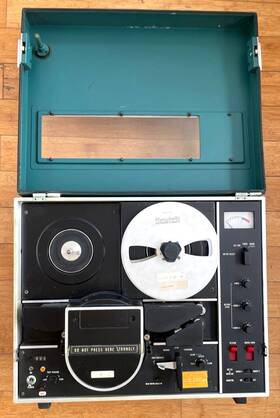
( Brand: Sony ), ( Manufacturer Part Number: EV-200R ), ( Model: SONY EV-200R B ), ( Country Of Origin: United States )
Review SONY B/w One Inch Videocorder rare Almost Extinct
The Sony EV-200R, a relic from the dawn of consumer videotape recording, stands as one of the most iconic and enigmatic machines ever produced by the company that revolutionized home entertainment. Manufactured in 1966, this groundbreaking black-and-white videocorder represents a pivotal moment in the evolution of television technology, predating the widespread adoption of VHS and Betamax by nearly a decade. As a rare survivor of an era when videotape recording was still an experimental luxury reserved for industrial and broadcast applications, the EV-200R is a testament to Sony s relentless innovation during the company s formative years under the visionary leadership of Masaru Ibuka and Akio Morita. This machine was designed to record and playback video signals onto a half-inch, open-reel tape format, a system that, while cumbersome by modern standards, laid the foundation for the portable and consumer-friendly videocassettes that would follow. The EV-200R s mechanical and electronic components reflect the engineering challenges of its time, with a robust, all-metal chassis housing a complex system of tape transport mechanisms, servo motors, and early analog circuitry. The unit s large, front-panel controls including a prominent tape counter, record/playback switches, and a manual fast-forward/reverse lever offer a glimpse into the manual precision required to operate early videotape equipment. Though it lacks the color capabilities of later models, the EV-200R s monochrome output is surprisingly sharp, thanks to Sony s advanced helical scan technology, which allowed for higher-quality recording than its contemporaries. Today, the EV-200R is an almost extinct artifact, prized by collectors, historians, and audiophiles alike for its historical significance and the sheer rarity of finding one in working condition. Its presence in a collection is not merely a nod to technological nostalgia but a tangible connection to the birth of videotape recording, a medium that would forever alter how we capture, preserve, and experience moving images. For those fortunate enough to encounter one, the EV-200R is more than just a vintage device it is a piece of living history, a machine that helped pave the way for the digital age while embodying the ingenuity of an era when innovation was driven by pure curiosity and ambition.
The Sony EV-200R (1966) is one of the earliest commercially available portable black-and-white videocorders, a relic from the nascent days of consumer video recording. Below is a detailed breakdown of its pros and cons, followed by a conclusion and recommendation.
---
### **Pros**
1. **Historical Significance and Rarity**
The EV-200R is an extremely rare artifact from the pre-U-matic era, predating the more common Sony U-matic format by nearly a decade. Owning one places you in a tiny circle of enthusiasts and collectors, offering a tangible connection to the early evolution of video technology. Its scarcity makes it a potential investment piece for those interested in vintage electronics.
2. **Technical Innovation**
As one of the first portable video recorders, it represents a major leap in consumer electronics allowing individuals to capture and store moving images outside of professional studios. The EV-200R used a 2-inch tape format (similar to later U-matic but distinct in design) and introduced concepts like portable recording, which would later revolutionize broadcasting and personal media.
3. **Cultural and Aesthetic Appeal**
The EV-200R embodies the mid-1960s design ethos of Sony: sleek, futuristic, and functional. Its compact yet bulky form factor, combined with the grainy, monochromatic output, evokes a nostalgic, almost sci-fi aesthetic. For collectors or artists, this could serve as a unique prop or inspiration for projects involving vintage technology.
4. **Potential for Restoration and Modding**
Since the EV-200R is so rare, finding parts or manuals is difficult, but this also means that restoring or modifying one could be a rewarding challenge. Enthusiasts with technical skills might enjoy disassembling it to understand its inner workings or even attempt to repurpose components (though this is highly speculative due to its age and complexity).
5. **Collectible Value**
Given its rarity and historical importance, the EV-200R could appreciate in value over time, especially if interest in vintage electronics or video history grows. Auction sales of similar rare Sony videotape machines (e.g., the later U-matic models) have seen prices exceed $1,000, though the EV-200R would likely command a premium due to its pioneering status.
---
### **Cons**
1. **Extreme Difficulty in Operation**
The EV-200R is not a functional consumer device by modern standards. It requires specialized tape (2-inch magnetic tape, likely obsolete), power sources (possibly a custom transformer or high-voltage supply), and technical knowledge to operate. Most users today would struggle to even power it up without extensive research or access to original documentation.
2. **Lack of Modern Compatibility**
There are no adapters, converters, or software tools to interface the EV-200R with contemporary devices. Unlike later U-matic or VHS machines, which could be connected to televisions or computers, the EV-200R s output would need to be viewed on a compatible monitor or oscilloscope, which are themselves rare and expensive.
3. **High Risk of Damage**
The machine is over 50 years old, and its components (motors, tape heads, electronics) are likely degraded or brittle. Attempting to use it without proper expertise could result in further deterioration or failure. Even handling it improperly (e.g., exposing it to moisture or handling the tape incorrectly) could ruin the tape or the recorder.
4. **No Practical Use Case**
Unlike a vintage camera or typewriter, which can still serve a limited creative or functional purpose, the EV-200R has no practical application today. Recording video would require setting up a complex, outdated system, and the output quality would be poor by modern standards. It is purely a static artifact unless you are willing to invest significant time and money into recreating its ecosystem.
5. **Cost of Acquisition and Preservation**
While the EV-200R might be affordable to purchase (as rare items often are due to lack of demand), the cost of preserving it could be prohibitive. This includes:
- **Tape**: Original 2-inch tape is nearly impossible to source. Even if you found compatible tape, it would likely be degraded or incompatible.
- **Power Supply**: Custom transformers or high-voltage supplies for vintage electronics are expensive and hard to find.
- **Labor**: Restoring or repairing it would require an expert in analog video technology, who may charge high fees for their time.
- **Storage**: The tape and machine would need to be stored in a climate-controlled environment to prevent deterioration.
6. **Ethical and Practical Concerns**
Given its rarity, there is a risk of overcommercialization or exploitation. If you purchase it primarily for resale, you may face ethical dilemmas about contributing to the depletion of an already scarce item. Additionally, without a clear path to use or preserve it, the purchase could feel like a speculative gamble rather than a meaningful acquisition.
---
### **Conclusion**
The Sony EV-200R is not a practical tool for modern video recording or playback. It is a historical curiosity with limited functional utility, requiring extensive technical knowledge, resources, and luck to operate or preserve. Its value lies in its rarity, cultural significance, and appeal to collectors of vintage technology. However, for most people, the challenges of acquiring, maintaining, and using it far outweigh any potential benefits.
---
### **Recommendation**
1. **If you are a collector or historian**:Purchase the EV-200R if you are deeply interested in the history of video technology and have the means to research, preserve, and potentially display it. Consider joining forums (e.g., Vintage Computing, Retro Tech groups) to connect with others who might share your passion and offer guidance. Document your acquisition thoroughly and explore opportunities to exhibit it in museums or archives.
2. **If you are an enthusiast or hobbyist**:Only proceed if you are prepared to invest significant time and money into understanding its operation, sourcing compatible parts, and possibly collaborating with experts. Be realistic about the likelihood of success this is not a project for the faint-hearted. Alternatively, focus on more accessible vintage electronics (e.g., later U-matic machines, VHS cameras) that offer a better balance of rarity and usability.
3. **If you are a potential buyer**: Verify the machine s condition thoroughly before purchasing. Ask the seller for:- Proof that the machine powers on (even if it doesn t record/play back).
- Documentation or manuals (if available).
- Information about the tape format and whether any tape is included.
Consider having an expert inspect it before buying to assess its viability. Be wary of sellers who claim it "works" without evidence, as this is highly unlikely.
4. **If you are not a collector or expert**:Avoid purchasing the EV-200R unless you have a clear, feasible plan for its preservation or use. Instead, consider supporting institutions (museums, universities) that preserve such artifacts or investing in more accessible vintage technology that offers tangible benefits.
In summary, the EV-200R is a fascinating piece of history but not a practical purchase for most people. Its allure lies in its rarity and legacy, not its functionality. If you are drawn to it for sentimental or collector s reasons, proceed with caution and thorough research. Otherwise, it may be better left in the hands of those who can appreciate and care for it properly.
Details:
This machine is a monochrome only full field recorder with stereo sound tracks. The two large sweep tubes serve as the motor drive amplifier for head wheel servo. All of the model's after this were color capable. The EV-200 uses one inch tape in a helical scan configuration with 2400 feet of on eight reels running at 7.
Refer to the second photo for tape pattern details. As mentioned earlier, it has hybrid circuits - that is, solid state mixed with vacuum tubes. This one could be converted for color operation, but I doubt that very many actually were. Compared to its predecessor and the Apex machine that follows, this was tiny almost all solid state. And its efficient, too.
It only contains two rather large vacuum tubes. To cover up the lawn mower like sound of video heads striking tape, EV-200 has a large almost proof not shown which can be closed while machine is operating. It weighs in at a petite 88 Lbs. A very rare artifact from Sony.
Untested, as I never sourced an A/C cord see pics for connection. Only sucking 277 watts of power to be ready use only a couple minutes after you turn the on.
specifications reeltapevintagego:
- brand: Sony
- mpn: Ev-200r
- model: Sony Ev-200r B
- country of origin: United States
seller reeltapevintagego:
- city: San Diego, California
- rating: 100.0%
- # reviews: 251
shipping reeltapevintagego:
payments reeltapevintagego:
- credit card: Diners-club
- other
- wallet: Apple-pay
returns reeltapevintagego:
- policy: No Returns
general reeltapevintagego:
- condition: For parts or not working
- Vintage Electronics > Vintage Audio Video > Reel-to-Reel Tape Recorders
offer reeltapevintagego:
- quantity: 1
- options: Ship-to-home
- sold: 0
- best offers: True
- started: March 4, 2026
- availability: In Stock
Sony EV-200R Is Similar To:
- Av-3400 Original Case Untested Videocorder Sony (45.9% similar) Up for offer is this rare, Sony av 3400 videocorder. It is a very heavy item around 7 lbs it does not have an ac adaptor so I was unable to test it. This item is in very good cosmetic shape, and is very clean, and has only two engravings that were eliminated and one snap on the original case that ...(January 25th, 2015)
- Sony-matic Solid Av-3600 Sony State Videocorder (33% similar) It powers up the motors run and the hubs turn when you turn the knob to play. No other testing done because there are no cords with it but a 3 prong extension cord will work for power. Up for bid is a vintage Sony av 3600 Sony mastic solid state videocorder...(January 28th, 2015)
- Av-5000a Sony Videocorder (36.8% similar) A friendly message through messaging is all it takes. Made in or around the mid 70S. If we made a mistake in our listing or there is problem please communicate with us first. Looks in good condition for its age. Sony videocorder AV-5000A. This is being sold as-is. Your positive support means a lot ...(October 20th, 2017)
- Av 8600 Sony Av-8600 Videocorder (44.7% similar) Supply reel turns when rewind is engaged. I am including a standard orange colored 3 prong power extension cord with this unit. Very heavy, weighs in at app 38 lbs. Offered is a vintage Sony av 8600 videocorder. Appears to be in good condition. Also a metal pin turns one direction and then the other...(December 18th, 2017)
- Mic Videocorder Vintage 1.5 Av3650 Ac117 0823 Sony Tv Fuse 70w Video 60hz (25% similar) Vintage collectable used, powers on, wheels spin, no further testing. 5 fuse mic video TV. Combined shipping is available. FedEx ground shipping and USPS are our preferred shipping carriers...(March 2nd, 2015)
- Empty Bvh-3000 R1-11v Vtr Air 1 Reel Videocorder 11.75 Sony Bvh-3100 Machine (38.6% similar) 75 x 1 very tough to find. Sony r1 11V video audio empty air reel. Used in good condition...(February 11th, 2015)
- Ev-310 Sony Vintage Videocorder With Remote Control Works (43.7% similar) 5 power consumption: 150 VA. Playing time is 60 minutes on a 2,460-FOOT reel of tape. Unit in working condition. 8 UPS plus minus. Tape wow and flutter: within. Monitor video monitor: one of the two outputs may be used audio either ch 1 or 2 selected 10K ohm balanced load standard accessories tape, ...(January 22nd, 2019)
- Ra-11a Sony 10 1-2 Inch (30.6% similar) Have a great day. Will package with care to ensure the item arrives at your destination in advertised condition. This time includes final bench testing before packaging. Shipping: shipping is calculated using FedEx ground...(April 5th, 2017)
- Rad-10 Sony One 1 Nab (26.5% similar) Good used condition single 1 Sony nab hub adapter for 10...(August 9th, 2017)
- Av-8400 Sony Sony-matic Color Auto Threading Portable Videocorder 21937c17 (35.3% similar) It features a convenient leather carrying strap case that is removable. The case has zippers and flaps to allow access to all ports on the unit. Up for sale is a vintage Sony Sony mastic auto threading portable videocorder, model av 84 featuring full color portable video cording. Defects not known ...(April 7th, 2016)
- Apr-5000 Sony Apr-5002 Apr-5003 Rare Remote Control Autolocator Rm-5010 Used (26.1% similar) Has about 25' or so of cable. Up for sale is one, rare, great condition, fully tested on my machine APR5003 Sony rm 5010 remote auto locator for Sony APR 5000 series decks make it yours. This is a rare remote to find I just don't use it for my machine, so decided to sell. Hard to come by. All lights...(October 24th, 2016)