AMPEX 02-5993-01 Controller Unit Start S-3201C S3200
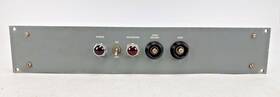
( Brand: Ampex ), ( Manufacturer Part Number: 02-5993-01 ), ( Model: S-3201C ), ( Type: Controller ), ( Country Of Origin: United States )
Review AMPEX Vintage Controller Unit Start Stop 3200 #1
The **Ampex 02-5993-01 S-3201C S3200 Controller Unit** is a rare and highly sought-after component from the legendary Ampex S3200 series of professional audio tape recorders, originally designed for high-end broadcast, post-production, and studio applications in the mid-to-late 20th century. This specific controller unit serves as the central nervous system of the S3200 system, enabling precise control over recording, playback, editing, and synchronization functions with unparalleled precision. Built to withstand the demands of professional audio environments, the S-3201C is constructed with robust, industrial-grade materials, including a sturdy metal chassis and high-quality switches, knobs, and indicators that reflect Ampex s engineering excellence. The unit features a comprehensive array of front-panel controls, including dedicated buttons for record, playback, erase, and cueing, alongside a series of illuminated status lights that provide real-time feedback on the system s operational state. At its core, the S-3201C integrates with the S3200 s advanced tape transport mechanisms, allowing operators to manipulate tape speed, direction, and positioning with millimeter-level accuracy, a critical feature for editing and mixing tasks. The controller also includes a robust interface for connecting to external devices, such as mixers, effects processors, and other Ampex or third-party equipment, ensuring seamless integration into larger studio setups. Historically, the S3200 series was renowned for its reliability, dynamic range, and ability to handle multi-track recordings with exceptional clarity, making this controller unit a vital part of the system s legacy. Today, the Ampex 02-5993-01 S-3201C remains a prized artifact for audio enthusiasts, vintage equipment collectors, and professionals seeking to preserve or restore the sonic quality of analog recording technology. Its inclusion in a setup offers a tangible connection to the golden age of tape-based audio production, where craftsmanship and engineering precision defined the standards of the industry.
The **Ampex 02-5993-01 S-3201C (S3200) Controller Unit** is a legacy audio control system originally designed for high-end broadcast and recording applications, particularly in the 1980s and 1990s. Below is a detailed analysis of its pros and cons, followed by a conclusion and recommendation.
---
### **Pros**
1. **Reliability and Durability**
The S3200 system was built for professional use, with robust construction and components designed to withstand continuous operation in demanding environments. Many units still function reliably after decades of use, especially if maintained properly.
2. **Compatibility with Legacy Equipment**
It is part of the Ampex S-Series, which was widely used in broadcast studios, post-production facilities, and recording studios. If you are working with other S-Series equipment (e.g., S-3200 tape machines, S-3200 mixers), this controller ensures seamless integration. It is also compatible with some modern digital interfaces through analog or legacy digital connections.
3. **Analog Audio Control**
The S3200 controller provides precise analog control over audio routing, faders, and mixing functions. This can be advantageous for engineers who prefer tactile control over digital interfaces, especially for tasks like live broadcasting or analog mixing.
4. **Modular and Expandable**
The system was designed to be modular, allowing for the addition of extra modules (e.g., additional faders, aux sends, or effects processors) as needed. This flexibility can be useful for customizing workflows in specific applications.
5. **Historical and Nostalgic Value**
For collectors, enthusiasts, or professionals working in vintage audio environments (e.g., film restoration, archival projects), owning an S3200 controller adds a layer of authenticity and historical context. It may also appeal to those who appreciate the tactile and analog feel of older control surfaces.
6. **Resale and Trade-In Value**
While not a high-demand item in modern markets, the S3200 retains some value among broadcast and audio professionals who still use legacy systems. It may be easier to trade in or sell compared to completely obsolete equipment.
7. **Low-Latency Operation**
Since it operates in the analog domain (or via legacy digital protocols like AES/EBU or analog sum buses), it avoids the latency issues that can plague modern digital audio workstations (DAWs) or networked control systems.
---
### **Cons**
1. **Obsolete Technology**
The S3200 controller is outdated by modern standards. It lacks digital signal processing (DSP), automation software integration, and modern networking capabilities. This makes it incompatible with contemporary digital audio interfaces, DAWs, or software-controlled mixing systems.
2. **Lack of Digital Integration**
While it can interface with some digital devices via analog or legacy digital connections, it cannot directly communicate with modern digital audio workstations (e.g., Pro Tools, Logic Pro, Ableton) or networked control systems (e.g., Avid Artist Series, Mackie Control). This limits its usefulness in modern production environments.
3. **Maintenance and Parts Availability**
Finding replacement parts for the S3200 can be challenging. Ampex discontinued the S-Series decades ago, and original components (e.g., faders, connectors, power supplies) may no longer be manufactured. Repairing or upgrading the unit may require sourcing parts from secondhand markets or specialized repair shops, which can be costly and time-consuming.
4. **No Automation or Software Control**
The S3200 lacks built-in automation or the ability to be controlled via software. Modern mixing consoles and control surfaces offer features like motorized faders, touchscreens, and software integration for recalling presets or automating mixes. The S3200 cannot replicate these functions.
5. **Limited Scalability**
While the system is modular, expanding it to meet modern demands (e.g., adding more channels, integrating digital effects, or supporting high-resolution audio) is impractical. Modern alternatives offer far greater scalability and flexibility.
6. **Training and Skill Gap**
Operating the S3200 requires familiarity with its specific workflows and controls, which may not align with the training or experience of modern audio engineers. Many professionals today are trained on digital consoles or software-based systems, making the S3200 less intuitive to use.
7. **Physical Space and Ergonomics**
The S3200 is a large, rack-mounted unit that requires significant desk or rack space. Modern digital consoles and control surfaces are often more compact and ergonomically designed, offering better workspace efficiency.
8. **No Built-In Monitoring or Metering**
The S3200 lacks modern metering features (e.g., VU meters, peak indicators, or digital level readings) that are standard in contemporary consoles. This can make it harder to monitor audio levels accurately in a modern studio environment.
9. **No Support for Modern Audio Formats**
The system does not natively support modern audio formats (e.g., 24-bit/96kHz, Dolby Digital, or object-based audio). Any attempt to use it with high-resolution or surround sound formats would require additional analog or legacy digital conversions, adding complexity.
10. **High Cost of Acquisition and Upkeep**
While the S3200 may be cheaper to buy than a new digital console, the long-term costs of maintenance, repairs, and potential upgrades can add up. The lack of modern support also means that any issues may require specialized (and expensive) expertise to resolve.
---
### **Conclusion**
The **Ampex 02-5993-01 S-3201C (S3200) Controller Unit** is a fascinating piece of audio engineering history with a strong legacy in professional broadcasting and recording. It excels in reliability, analog control precision, and compatibility with legacy systems, making it a valuable asset for specific niche applications such as:
- **Archival or restoration projects** where analog workflows are preferred.
- **Live broadcasting environments** that still rely on analog routing (though this is increasingly rare).
- **Collectors or enthusiasts** who appreciate the aesthetic and functional qualities of vintage equipment.
- **Workshops or educational settings** where teaching analog audio principles is a priority.
However, its obsolescence, lack of digital integration, and maintenance challenges make it impractical for most modern audio production environments. The S3200 is not a tool for creating, editing, or mixing audio in contemporary formats it is a relic of a bygone era best suited for specialized or nostalgic use.
---
### **Recommendation**
1. **For Professionals or Collectors:**If you are working in a **legacy environment** (e.g., restoring old broadcasts, maintaining a vintage studio setup, or using it as part of a larger S-Series system), the S3200 can be a worthwhile investment. Ensure you have access to maintenance resources and consider pairing it with modern digital interfaces for hybrid workflows. Budget for potential repairs or upgrades to keep it functional.
2. **For Modern Audio Production:**Avoid purchasing the S3200 for contemporary audio work. Instead, invest in a **modern digital mixing console** (e.g., Avid S6, Mackie ProFX, or Allen & Heath GLX) or a **software-based control surface** (e.g., Ableton Push, Native Instruments Komplete Kontrol) that integrates seamlessly with DAWs and offers automation, DSP, and digital routing.
3. **For Enthusiasts or Hobbyists:** If you are drawn to the S3200 for its historical significance or analog feel, consider:- **Renting or borrowing** the unit for specific projects to avoid long-term commitment.
- **Pairing it with a modern interface** (e.g., using its analog outputs to feed into a DAW via an audio interface like Focusrite or Universal Audio).
- **Exploring modern analog control surfaces** (e.g., the **Behringer X32 with analog faders**, **Rane MP2000**, or **Soundcraft Ui12**) that offer a similar tactile experience while being fully compatible with modern systems.
4. **For Budget Constraints:** If you are looking for an affordable alternative to the S3200, consider:- **Used digital consoles** (e.g., older Avid, Neve, or SSL units) that are more maintainable and versatile.
- **Analog mixing boards** (e.g., **API 2500, Neve 1084, or Studer V-12**) that retain analog warmth while being more accessible.
- **Software emulations** of analog consoles (e.g., **Waves NAD, Universal Audio plugins**) for a modern yet analog-inspired workflow.
---
### **Final Verdict**
The Ampex S3200 controller is a **specialized tool with limited modern applicability**. It is best suited for those deeply embedded in legacy audio workflows or those who value its historical and analog characteristics. For everyone else, modern alternatives offer far greater functionality, flexibility, and longevity. If you are serious about using the S3200, ensure you have a clear, niche use case and the resources to maintain it otherwise, it may become a costly hobby rather than a productive tool.
Details:
RSM can not offer combined shipping or discounts on as the price reflects fees and import charges. Ampex 02-5993-01 S-3201C Serial #: 84-0080, Comes with multiple used Jones connectors. The metal frame is slightly bent. Low starting bid and no reserve.
Sold AS IS for parts/repair, please see high-res photos more details.
part #: 02599301 price
- $99.95
specifications reeltapevintagego:
- brand: Ampex
- mpn: 02-5993-01
- model: S-3201c
- type: Controller
- country of origin: United States
seller reeltapevintagego:
- city: Beverly, Massachusetts
- # reviews: 4476
- rating: 100.0%
offer reeltapevintagego:
- options: Ship-to-home
- sold: 0
- best offers: True
- availability: In Stock
- started: April 18, 2026
- quantity: 1
returns reeltapevintagego:
- policy: No Returns
payments reeltapevintagego:
- wallet: Apple-pay
- credit card: Discover
- other
shipping reeltapevintagego:
- carrier: UPS
- type: Calculated
- cost: $27.08
- class: Standard
- transit: 4-9 Days
- service: UPS Ground
general reeltapevintagego:
- condition: For parts or not working
- Vintage Electronics > Vintage Audio Video > Reel-to-Reel Tape Recorders
Ampex 02-5993-01 Is Similar To:
- 01-96520 Ampex Vintage Nos Remote Control Tape Transport Panel No Cable (41.7% similar) I have described this item to the best of my ability and do not intend misrepresent. This control set is new-old stock, unused the box was opened only to verify contents. Catalog sometimes appended with 02 or bid your overall costs in mind. Useful, I am advised, with 350, 351, PR-10, AG300 series, ...(August 25th, 2018)
- 02-96170-05 Ampex Amepex Vintage Tape (30.9% similar) Ampex vintage tape head, looks possibly unused. But not certain imperfection in top left corner unable to test 14 day return...(October 25th, 2017)
- 078635786927 Vintage Ampex 499 Reel Grandmaster (26.7% similar) You are buying on a vintage Ampex 499 reel grand master gold studio mastering 2 full audio tape. It is not tested, appears to have music on it, a couple of splices, see photos...(January 15th, 2017)
- 1.0 M1 Ampex Vintage Aluminum Reel Instrument Tape Wide Empty Take Up (35% similar) Used for military testing of some kind. Free media shipping with purchase. Vintage Ampex aluminum 10. Good for use as take up reel or repurposed into something else. 5 reel instrument tape 3600' 1/4 wide empty take up images to vintage late 50S early 60S Ampex...(October 27th, 2018)
- 1070 Ampex Vintage Reel To Tape Deck Parts Digit Counter Assembly (34.8% similar) This item may fit other model's as well. Vintage Ampex 1070 reel to tape deck parts - rolling digit counter assembly in good used condition pulley needs be cleaned before use please see pictures. Measures by 7/8 inches. I've done my best to describe this item - the rest is up you. Please know this ...(March 31st, 2019)
- 1150 Ampex Vintage Estate Reel (35% similar) ...(May 29th, 2017)
- 1260-2172 Ampex Vintage Reel To Tape Recorder Model With Carrying Case (33.6% similar) No power cord, tested with a rigged up one and works fine...(December 29th, 2018)
- 1270 Amplifier Ampex Vintage 1960s 1270 Reel (32.5% similar) Just the and what is shown included. This is a genuine Ampex tube amplifier removed from model 1270 deck system. Tested on basic functions and working...(January 6th, 2017)
- 1297323-01c Ampex Master Control Controller For Data Tape Drive (39.7% similar) This unit has been used. If in doubt, please before purchasing. All pictures are taken in house. Minimum handling charge is 75 onto a standard pallet and increases for custom pallet's. If you do receive the package, submit clear images of packaging box and damaged item from multiple angles. Your ...(May 20th, 2018)
- 1297568-01c Ampex Data Tape Drive Controller Transport Servo Board Assembly (40.5% similar) USPS or ups ground. Please by sending a message through or calling. Your satisfaction is extremely important to us. Compatibility issues are not considered DOA. Ampex ER90 data tape drive controller transport servo board assembly 01C this offer only comes with what is pictured or listed in the. Save...(May 20th, 2018)
- 1297878-01b Ampex Msr Control Data Tape Drive Master Controller Assy (35.5% similar) Do not discard the packaging. Our contact: Rodney Wang SC asset management, inc. Are only included if pictured or listed in. If you do receive the package, submit clear images of packaging box and damaged item from multiple angles. All parts, including accessories and cables are only included if ...(October 4th, 2018)